




Hints of Hope: Essays on Making Peace with the Proximate by Steven Garber is available now through Hearts and Minds Bookstore and on January 20, 2026, everywhere else. TWI has a relationship of long trust with Byron Borger at Hearts and Minds, known far and wide as “the best bookstore in America,” offering exceptional service to one and all, with a human face.
Seashells on the Seashore: An Introduction
“Anyone who claims that I am a dreamer who expects to transform hell into heaven is wrong. I have few illusions, but I feel a responsibility to work towards the things I consider good and right. I don’t know whether I’ll be able to change certain things for the better, or not at all. Both outcomes are possible. There is only one thing I will not concede: that it might be meaningless to strive in a good cause.”[1] — Vaclav Havel, Summer Meditations
Broken hallelujahs.
Even walking along the beach in the first hour of the morning, I think about the image of a “broken hallelujah”—as my wife Meg said so plainly, so perceptively, “You think about that all the time.” And I suppose I do. Step by step I see the shells of the seashore washed by the waves, each one wonderfully-imagined, intricately-formed, and yet and yet, not all that it could be and should be.
So very beautiful, but broken too. Like everything everywhere.
Though in my heart of hearts I long for a different life, wanting with all that I am a different world, what I see is always marked by both joy and sorrow; never neat-and-clean, but instead somehow both at the same time. The work of my life is to find an honest way to live with both together; in another sense, more globally-born, all of us work at that, because in some sense we all have to, the world being what it is—and over the years I have wondered and wondered again, reading and reading more, living in and through the days of life, feeling the tension of what is and what is not in my very bones. What is clear to me is that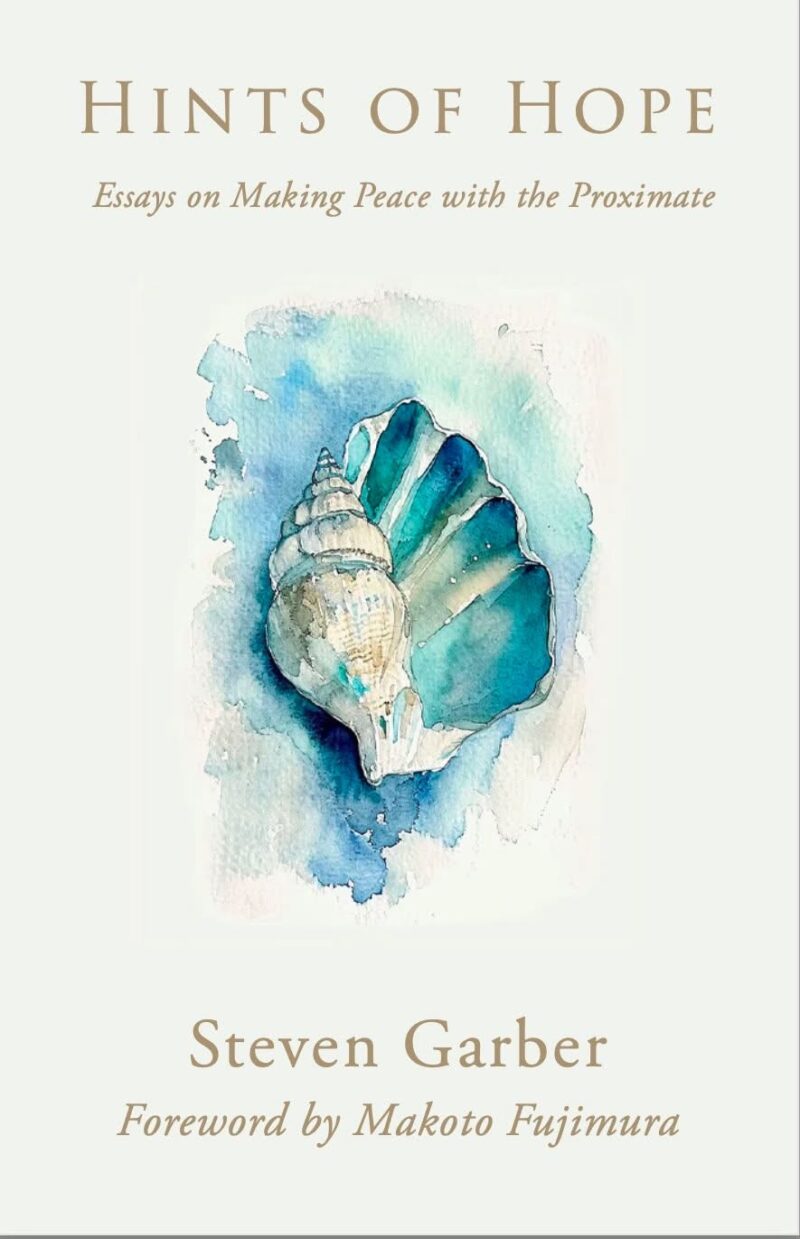 there are some ways of seeing that resolve the tension by denying that there is a tension, but that is neither sufficient nor sustainable. The differences are real, and they make a difference. All day long we are confronted with both, and we have to somehow make sense of the world and our place in it, being honest about both what is glory and what is ruin.
But why “broken hallelujahs”? The words are from the poetic imagination of the singer/songwriter Leonard Cohen, and his words run through my very being. With an artful, haunting eloquence, the song wrestles with the tension of life, the beautiful and the broken together, open-hearted wonder and melancholic despair… a broken hallelujah.
Truth be told, I have been walking the beaches of the world for a long time, looking for a perfect shell, sauntering through the surf, hoping that sometime and someday there it will finally be. What I find instead are hundreds and thousands of shells that seem just about perfect… but are not.
So many of course are terribly broken, now only fragments of what they once were; in their very different ways they make me sigh. But the ones that trouble me are those that appear to be more than that, that seem to be perfect—until I stop and look more closely. The colors are always uniquely created, the shapes are always uniquely crafted, and from six feet away they are amazingly beautiful. But when I bend over, the cracks are obvious, the almost-perfect outline is not quite, the holes stand out, and I find that each one is uniquely marred.
I first thought of this walking along the Assateague National Seashore in Virginia many years ago, there to take part in the wedding of dear friends. They had asked me to give the homily, to muse over the meaning of marriage as they made their promises to honor and love “til death do us part.” So I did my best to celebrate the day, glorying with them in the happiness of the hour, standing as they were amidst family, friends and flowers with hope in their hearts. But given where we were I also reflected on the shells I knew, each one so very special, but each one a reminder that nothing is perfect. Wonderful as they were, wounded they were too.
Like every marriage I know. Like every family I know. Like every life I know. From the most personal to the most public, nothing we know is perfect in every way, and only the naive imagine otherwise. Slowly, slowly we all realize that we have to make peace with the proximate, and simply said, that is the challenge of my life. Of proximate justice in the public square. Of proximate happiness in a marriage. Of proximate pleasure in the work of our days. Every day I cry out against that conclusion, yearning for something more, my inward being groaning with creation itself— and eventually sighing over the weight of the world, knowing that everything is less than it could be and should be. As Bob Dylan has so poetically and profoundly remembered, everything is broken.
“Broken dishes, broken parts, broken streets are filled with broken hearts…”[2]
Yes, everything is broken. As true as that is for individual lives, it is true for the public square too— as it is true for the work and workplaces of our lives, as it is true for the friendships and marriages of our lives. All day long I live with disappointment and grief and pain, like everyone I know well enough to know. And while I live my life wanting more, expecting more, to remember another poet, Bono, I never find what I’m looking for.[3]
And why is that? Because I am a glorious ruin myself. In my heart and mind I am never more and never less than that, both truths threading their way through the fabric of my life—and with strange grace, what is true of me is true for the world.
Even the shells have a story to tell… if we have eyes to see.
And that, simply said, is why I have written this book, in hope that we all will see more clearly the meaning of the world and our responsibility in it, a responsibility born of love that it is. With windows into life and the world in the first chapter, reflecting on what it is to work for something that matters, even when not all we long for is satisfied; on into the great question of my life, and of life, that of telos and praxis, connecting the point of life with the point of my life; into an examination of stories within stories, the reality that for everyone everywhere we live stretched between metanarrative and narrative, our beliefs about all of life and our lives, frail and finite as they are; then pondering the weight of love for all of us who care about the world, knowing that even as “it all turns on affection,” that brings its own challenge and complexity; from there the stories of friends from throughout the world who in their places among their peoples live in and with the proximate; the next chapter is about the commitments that make marriages and friendships the gifts of long-loved loves that they are, proximately, tenderly incarnate as they will be; there is no one in the world, though, who lives very long without being wounded by the world, scarring us as we care for and about it, hoping for what has been broken to become beautiful again; and finally, our deepest yearnings for what the world should be shape the way we live, longing for something more than what is, we make peace with what can be, in hope for what someday will be.
This is the book, from beginning to end, learning to live with deepened faith, deepened hope, deepened love, keeping our hearts alive in and through the years of life, learning to keep on keeping on into a pilgrimage of the proximate.
[1] Vaclav Havel, Summer Meditations (New York: Knopf Doubleday, 1993), 16-17.
[2] Bob Dylan, “Everything Is Broken,” Oh Mercy (New York: Columbia Records, 1989)
[3] U2, “I Still Haven’t Found What I’m Looking For,” Joshua Tree (London: Island Records, 1987)
Foreword by Makoto Fujimura, Excerpt
Makoto Fujimura is a leading contemporary artist whose process-driven, refractive “slow art” has been described by David Brooks of The New York Times as “a small rebellion against the quickening of time”. Fujimura’s works have received critical recognition for over three decades and are regularly exhibited in museums around the world. Bio continued ›
Steven Garber is a treasure, and his writing reveals why, his resonant words echoing in the caverns of our cold and damp modern hearts, his precious, loving words reaching the depths of darkness that few words in the past, much like those of C. S. Lewis or Frederick Buechner, dared to have reached.
…
Steven’s writing also amplifies our own stories and histories. When he chronicles his father, a man of “integrity of heart,” I think of my own father, and of how “proximate” means more than mere physical closeness, but is woven into generational roots of shared concerns and overlaps of experiences. His writing helps me to steward my own memories and stories:
For reasons of the heart that are as deep as we are, sometimes when we wake to the morning, the bright shining sun or the slow drip of rain, we are drawn to its complexity, wondering why and what and wherefore. Artists are folk like that—on canvases and pages, stages and screens, feeling things first before the rest of us do, seeing and hearing the world in its glory and its ruin, the vocation of their lives reflecting the longings of the heart. . . .
And when he writes, “Artists are folk like that,” Steven speaks into my own soul, wrestling as it does in prismatic complexity, never trying to reduce the beautiful mess into something neat and sanitized for the marketplace, but trying, as an artist, to be as honest as I can be. Indeed, we are “seeing and hearing the world in its glory and its ruin” as artists. That is a journey into the labyrinth of complexity, of multiple worlds colliding, and it is rare to find someone willing to let that tension live in words.
…
Yes, Steven Garber is a treasure, and his writing reveals why. After reading his work, like many others before us, we may find ourselves wanting to talk with him, “Do you have time for a conversation?” And he will nod, saying “yes,” with his soft refrain, a sojourner willing to share these pages with us, sojourners we all are.
Review by Ehsan Samei, Duke University Medical School
Dr. Samei is a Persian-American medical physicist. He is the Reed and Martha Rice Distinguished Professor of Radiology, and Professor of Medical Physics, Biomedical Engineering, Physics, and Electrical and Computer Engineering at Duke University. He serves as the Chief Imaging Physicist for Duke University Health System, the Director of the Carl E Ravin Advanced Imaging Laboratories and the Center for Virtual Imaging Trials (CVIT), and Co-Director of the Triangle Centers of Excellence in Regulatory Science and Innovation (Triangle CERSI). Bio continued ›
A note from the author: A book is being born, and the first review captures its hope with remarkable insight. Written by my friend Ehsan Samei, he has read me well, his unusual gifts that bring together art and science in one life give him finely-formed lenses to understand what I have longed for in my writing.
A thousand times I have responded to invitations to “come and speak,” always with different people in different places, each time a gift because I am drawn into conversations with unexpected consequences—and that is the way I met Ehsan. While we were living in Vancouver BC I was asked to come speak about the book, Visions of Vocation with an Anglican church in Durham, NC. And so I did.
On the Saturday afternoon of the weekend, we took a long walk around the lake of the retreat center, talking about life in the world, especially about the idea of vocation which deeply intrigued him.
That conversation has become a conversation for life, and each time we talk again we are further up and further in to a surprising collegiality, finding that even and especially with our very different histories and vocations, we see and hear the same world. Much more could be said, and someday will be. — SG
“My review of this remarkable book:
The famous Danish physicist, Niels Bohr, once said, “It is wrong to think the task of physics is to find out how nature is. Physics concerns what we say about nature.” The truth of this statement goes beyond physics. It implies the fundamental fact that explaining something is not the same as knowing it. We can get near, but not exactly there. This nearness, or “neighborliness,” you might say, is the basis of the principle of the “proximate” (from the Latin proximatus) that Steven Garber explores in his Hints of Hope: Essays on Making Peace with the Proximate. The book reads like a memoir, a series of warm and deep conversations with a dear friend.
He demonstrates that the proximate is present not only in our access to knowledge but also in our ability to love. He shows how we have this remarkable potential of getting close to perfect knowledge and perfect love, but can never do so perfectly, a discouraging constraint. Longing and hope, deep sentiments known to us all, reflect this juxtaposition of potential and constraint. So, knowledge, beauty, and love are all possible, but never perfectly attained. Seeing and sensing the vision, but not quite getting there, keeps us always a step away from perfect knowing and from perfect loving.
The essence of closeness-but-not-attainment defines the nature of the relationship between man and knowledge, man and man, and man and God; we can know, relate, and love, almost, but never fully. This realization can be discouraging, and often it is. The impatience for perfection can also be debilitating, even destructive, if we cannot accept this fundamental state of our earthly existence. We might as well either give up on striving for anything or, alternatively, seek to create the perfect heaven on earth by our own hands, according to our own timeline. Human history shows many examples of the destructive power that such perfection-seeking utopian ideologies can produce. Seeking perfection without accepting the proximate becomes tyranny.
Garber gives us more than just a philosophical pondering on the nature of human striving. He offers us a remedy: coming to peace with the proximate. He illustrates how a mature coming to peace with the proximate helps us to embrace our true nature: a remarkable potential paired with a humble access to knowledge, beauty, and love. Given this fundamental, epistemological reality, we indeed have no other choice: without embracing our proximate access to perfection, we end up fabricating the perfection, and are tempted towards falsehood in order to preserve the “truth” we wish we had found. Garber offers us a way to be an authentic human and to have a meaningful life in a seemingly meaningless world. In doing so, he helps us to answer the ever-present question of human existence: who are we, and what is our vocation. That is the most remarkable takeaway from this thoughtful book.”
Select Endorsements
“Dear Reader, I’d like to warn you. You’re about to run a serious risk of growing a bigger heart and a richer life. Steven Garber is about to offer you a more real and grounded kind of hopefulness than you’ve ever known, but it comes at the necessary cost of a deeper heartache beneath. It’s well worth it, but you should know what you’re getting into… I have never found a bigger heart and a finer mind co-resident in the same human body… He will use his hard-won acumen to kindly and expertly walk you up close to know intimately what you’ve long suspected vaguely – that we were made for more than this…”
—Dave Evans, Co-Founder, Stanford Life Design Lab, Stanford University, co-author: Designing Your Life, and How to Live a Meaningful Life.
“In an increasingly adrift world, Steven Garber has a gift for finding the precise words and analogies that our hearts and minds are longing for. When we encounter these truths in his work, it is as if they were always there, waiting to be named. “Proximate” is one such word—a concept with such weighty consequences that once you grasp it, you’ll wonder how you ever lived without it. The journey of the proximate is made possible by wrestling deeply with moral meaning, humility, and neighborly love. This is one of his most profound books, rekindling the moral and aesthetic imagination as he reflects on the nature of stories, of loves, of good societies, and on our knowledge and its responsibilities— Hints of Hope is at once beautiful, engaging, and practical.”
— Kwang Kim, Chairman of the Board, Human Flourishing Foundation, and Director of the Asia Economics of Mutuality Center, Seoul, South Korea
“Steven Garber offers us a poignant account of the nearness of grace in real time— the proximate. These are peace-making words; telling things as they are, while giving hope to the heart. Honest and effortless, Garber is at his most lucid and longing here, re-enchanting us with reminders of the deep substance of real living.”
— Sandra McCracken, singer-songwriter
“There are books. And then there are books. Hints of Hope is is one of these rare readings which draws you into the heart of what life is about— about who we are, about what we see ourselves as, about who we are meant to become. Every chapter strikes very deep strings in Garber´s unique way, containing questions and wisdom potent to make the reader a little more like who God intended us to be. It is a must-read for everyone eager to find and sustain hope and energy for continued work to improve the world, as our world again faces unprecedented challenges.”
— Hermund Adler Haaland, Founder/Director Zebr Institute, Oslo, Norway
“Steven Garber has earned the attention of CEOs and students, civic leaders and rural pastors, because Steven Garber pays attention to what God is doing in the world and in the lives of others. I consider him to be a spiritual giant, and his books to be treasures. The Lord has cultivated great fruit in Steven over the course of his life, and this book is a tremendous expression of that fruit. Read this book to make peace with the proximate, and to gain great hope for the future.”
— Michael Wear, President and CEO of the Center for Christianity and Public Life, author of The Spirit of Our Politics: Spiritual Formation and the Renovation of Public Life
“All people are born curious about the world, but few remain so. All people are confronted with the challenge of meaning-making in this life, but few embrace it. All people inhabit a sacred Earth, but few see it. Hints of Hope is the testimony of one, the fewest of the few, who has embodied and modeled all three. ‘Given the way that I am, I thought of all this and more’ is a thread that runs throughout Hints of Hope. It captures the delights and dilemmas of Steven Garber’s lifelong pursuit of meaning-making in – and through – our quotidian and transcendent, ephemeral and eternal, lives. That pursuit is a virtue. Like all virtues, achieved only through mindful, intentional, sacrificial action over the long haul. And, like all virtues, holding the capacity to change the world.”
—Richard Lindroth, Ph.D., Vilas Distinguished Achievement Professor, University of Wisconsin-Madison
“Gentle. Wise. Sorrowful. Hopeful. Those words repeatedly echoed in my head, my heart, as I read the essays that make up Hints of Hope. As Steven Garber guides through his reflections on making peace with the proximate—which is what life in this world requires, after all, if we aren’t to go mad, and if we are to be faithful to God’s mission for us—he doesn’t leave us with frustration and sorrow. Rather, he brings us over again to the God of hope, the God of resurrection, who ensures that our labor is not in vain, is not vapor or futile, in the Lord. As a result, life in this already-but-not-yet world is worth engaging, loving, fighting for. By the end of the book, I found my head and heart also crying out, ‘Thanks be to God!’”
— Sean Michael Lucas, Chancellor’s Professor of Church History, Reformed Theological Seminary, author of God’s Grand Design: The Theological Vision of Jonathan Edwards, and Senior Pastor, Independent Presbyterian Church, Memphis, TN | Read TWI’s interview with Sean Michael Lucas on “The Vocation of Historians”
“Few people have shaped how I see and question the world more than Steven Garber. His patient wisdom, unwavering moral clarity, and refusal to detach love from responsibility continue to call me, and so many others, to live faithfully in the tension between longing and limitation. I am profoundly grateful for his friendship, his hard-earned hope, and the quiet way he keeps our hearts oriented toward what is good, true, and enduring. Hints of Hope is his most distilled and personal work yet— an invitation to see the world as it is, to long for what it might be, and to love faithfully in the space between.”
— Bryce Butler, Managing Director, Access Ventures
“l’ll never forget the first time I heard Steven Garber talk about the proximate, in a conference room at the Sydney Airport, and I had only just met him. We had gathered as theological educators from around Australia, all interested in promoting whole life discipleship, and to hear from Steven on his latest work. He gave two enchanting talks: lyrical, seminal, and richly theological. He mentioned his concept of proximate: the idea of us all being broken and making peace with less but remaining hopeful and purposeful for what could be and will be. He was talking about how we can take that into our workplaces, but immediately I told him that he had probably just saved my marriage! Now we have the book of those musings, written in his distinctive beautiful style: a feast for the senses as we join him on a pilgrimage of the proximate.”
— Kara Martin, author of Workship, Co-Chair Theology of Work Project, Melbourne, Australia | Read TWI articles from Kara Martin
“If you wrestle with how to stay grounded in wonder and joy while navigating the broken pieces of the world around you, Steven Garber is a kindred spirit. In Hints of Hope, Steven accompanies us on our journeys of longing for love and beauty in an imperfect world. He lights the way for living faithfully in the tension between the world as it is and as it should be. Let this book be a comfort and companion in your struggle to embrace love and hope over despair.”
— Peggy Wehmeyer, journalist and op-ed writer, formerly with ABC World News Tonight
“Steven Garber draws from the wisdom of literature and film, and as well as from lives he has known that have been lived proximately even among the ruins: ‘Different people in different places, but from every corner of the earth men and women who keep on keeping on, longing for what should be, making peace with what can be, each one committed to seeing and hearing and feeling the world like God does, as human beings must, as human beings sometimes do.’ And in doing so, Garber has distilled a rich lifetime of insights and relationships in the compelling narratives of this good and important book: narratives that give deep insight into the Metanarrative we so desperately need to understand: the Story that makes sense of and gives meaning to our stories so that we can live proximately in this time of now-and-not-yet.”
— Matthew Dickerson, Professor at Middlebury College, and author of Birds in the Sky, Fish in the Sea: Attending to Creation with Delight and Wonder and The Mind and the Machine: What it Means to be Human and Why it Matters. | Read TWI articles from Matthew Dickerson
“Steven Garber has a wonderful gift— writing with a sense of hope, he explores tough challenges but does not leave us clueless. When it is so easy to become dismayed and overawed by the scale of suffering in the world, hope must be turned into something tangible, life-giving and lifesaving— and Hints of Hope spells that out, for all of us.”
— David Alton, Professor the Lord Alton of Liverpool, Independent Crossbench Member of the House of Lords. Chair JCHR – Joint Committee on Human Rights, London, U.K.
“We live in very uncertain, almost dark times— for us who grew up in totalitarian Czechoslovakia it is especially sensitive —times when lie are the foundation of governing and trust is fading between people. We all need very bright ‘hints of hope’ — that truth and love will overcome lies and hatred. Steven Garber shows us in his ideas, stories and brilliant writing, where we can see them. Absolutely necessary to read this excellent book, especially today.”
— Jozef Luptak, cellist and curator of Konvergencie Festival, Bratislava, Slovakia
“With luminous prose and moral imagination, Hints of Hope invites us to see the world as it truly is—beautiful and broken—and still believe in something more. As Steven Garber reminds us, ‘We all need a word like that, a word deep enough and true enough to keep our hearts alive.’ And proximate is that word. Yet these are more than words. Each chapter reads like a prayer—prayer in prose—that refuses cynicism and chooses hope, even while honoring our personal and shared heartache.”
— Chuck DeGroat, Professor of Pastoral Care and Christian Spirituality at Western Theological Seminary, author of Healing What’s Within