


Vocation • Visions of Vocation
Responsible for Folks That Have Been Forgotten
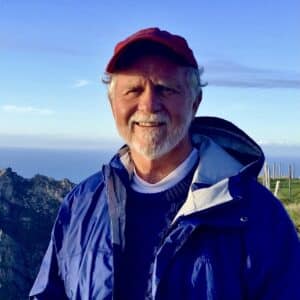
This article is excerpted from Steve’s book Hints of Hope: Essays on Making Peace with the Proximate, available at Hearts and Minds Bookstore as well as elsewhere.
And the doors clanged shut, which is very sobering…
The few times I have walked in, I have walked out. A long time ago now, I was asked to spend a week of my 19 year-old summer with a group of youthful offenders in the Sierra Nevada mountains of California. I did, and still remember some of those days, and nights. Hope and longing, anger and hurt, hikes up and down the trails— and a visit to the state prison nearby, which was meant to be an inoculation, taking these 15 year-olds into a place that no one would ever want to be, hoping that seeing and hearing would make them do everything they could to stay out.
The door clangs shut in places like that.
Years have passed, and not so long ago I walked into another prison, spending an afternoon in the Kansas State Penitentiary in Hutchinson, a maximum security prison housing men who will be there for a long time, if not for life. I was with a friend, Pete Ochs of Wichita, someone I have known since we were ten year-olds spending summer weeks in the Rocky Mountains of Colorado at a camp near Estes Park. He was from Kansas, and I was from California, and so there was not much of an opportunity to get to know each other well, the summers being the only time we were together.
We lost touch after high school. I imagined him staying in Kansas, forming a life in the farming economy that was his as a boy, but did not really know. And then, surprise of surprises, most of life later, I was walking down a hallway in a hotel in Florida one day, and heard a deeper, older voice, but one I recognized, “Hi. I’m Pete Ochs,” as he introduced himself to someone. I turned around, and it was.
We had a meal or two together the next couple of days, and hoped for more. When I knew I was going to be in Wichita, I wrote Pete, and he welcomed me, wondering if I would have “four hours or so” to go visit a prison with him. As I was speaking on the theme of vocation and the common good at Friends University, while honestly nodding to the Quaker history of the school, wanting them to know that I had thought about them and their history with its unique-in-the-world raison d’etre, I also brought into the address my friend Pete, who I now knew more about, after the years of silence.
He had chosen to study business as an undergraduate, and began a career in banking, all the while dreaming of more. Wanting to learn the ropes of money and the marketplace, by the time he was 30 he had set out into the creative, imaginative, and sometimes risky world of becoming an entrepreneur. First one idea, then another, then more and more, and by the time he was into his 40s he had brought into being several healthy businesses— and was still wanting more. Not more money so much, but more meaning.
And he found that in a company of other guys like him, scattered about the country, all about the same age, each one a serial entrepreneur like him, each one someone of honest faith who longed for more accountability, for more friendship, for more relationship between what they believed about the world and how they lived in the world. Together they set out on a pilgrimage, meeting several times together each year, listening to each other, prodding each other, encouraging each other, even opening their bank accounts to each other. They wanted to know, and to be known.
That experience of the iron-sharpening-the-truest-iron forged in Pete a surprisingly deep sense of responsibility. While he was born into that ethos of heart and mind as the son of parents who loved God and their land, his father and mother making unusual choice after choice so that their children would learn to love what was worth loving, the years after college are critical years for all of us. Who do we want to be? What do we want our lives to be about? How will we live?
The moral philosopher Iris Murdoch has written for the ages that, “At crucial moments of choice, most of the business of choosing is already over.” Not a soft determinism, at all; instead a profound understanding of character, and the ways we see and hear the world characteristically.
True for everyone everywhere, it was true for Pete. With unusual discipline and focus, over the next 20 years he learned all he could about the work of his life, developing habits of heart that became “him,” affecting his hopes, influencing his dreams. But with all of that true, he would say that the chapter of his life in which he is now living, the 25 and more years of praying, thinking, and working together with these other men has been critical for him in becoming the man I met in the hotel lobby in Florida. Able and responsible, committed and generous, always eager to know more about the world, and what he might do to form and shape it in ways so that more people and places would flourish— whether in native Kansas, his home in Wichita, or far and wide in cities and countries beyond those worlds.
After I was finished speaking, he picked me up and we drove to Hutchinson. We had years to talk about, and only got started. But before too long, the high walls of the prison were visible, and we drove into the parking lot. He told me that he had imagined himself doing something “good” for the men, that he could use his business experience to bring change to their lives. But in his own very plainspoken way, he said, very simply, “They have changed me.”
We walked into the prison, through gate after gate, door after door, locks and more locks, guards and more guards. Finally we were through, walking along the razor-wire tunneled fence past the high stone wall, to a long, low blue building which houses Pete’s company, a business at-work within the prison.
About 15 years ago he began thinking of another way to do business, one that would be within the walls, an honest business where prisoners could learn honest labor, earn honest money, and become honest men. He is no romantic, and the Kansas State Penitentiary has no romantics on its staff. But for the sake of trying something that might matter a lot, Pete persuaded the warden to allow “the best prisoners,” the ones who over time had earned trust, to become his employees. It was a proximate proposition, from Pete to the warden, an idea born of hope of what could be. Still a prison, still prisoners, but a willingness to enter into a place desperately in need of something more, creating a signpost of more justice, more mercy, more humility.
As we walked around, Pete knew their names, and asked about their lives, sometimes about their kids. Every one was hard at work, which is the order of the day, and the prisoners seem to understand that good work well done is its own reward— and of course that they are paid an honest wage matters too. Some of the men are there for life, some are there for years to come, but each one we talked to seemed glad to be known, and respected. Like every one of us, they long for dignity, and in a fragile place on the plains, a frightening place in the middle of Kansas, they have found something that they had not known.
As I thought about it all, watching Pete walk through the prison, I wondered why? What is it that makes someone see himself implicated, for love’s sake, in the way the world is in all of its hurt, responsible for the way the world could be? Simply said, he sees with his heart, and knows that what he knows can be a gift to those who have lost their way. His business interests are far and wide, and do not demand that he work with prisoners; in fact for most of his life he did not. But over the years he began to see himself as a steward of good gifts, in fact seeing his whole life as a stewardship before God in service to the world— and then begin to see himself responsible for folks that had been forgotten.
I kept thinking back to the mountains of Colorado, ten year-olds that we were, sitting beside each other, learning about the most important things in life in one of the most beautiful places on earth— right below the majesty and glory of Long’s Peak — having no idea that we would someday walk into an uglier place, for love’s sake, a place where most of us never want to be.
But it is also a place where Pete belongs, because of his own calling to care about things that matter to God and the world. His vocation has become a common grace for the common good, serving Kansas and beyond in and through his entrepreneurial imagination. In a strange calculus, while his hope was to bring change, the most surprising change is in his own heart, giving him eyes to see that good work matters for everyone everywhere— even in a place where the doors clang shut.